
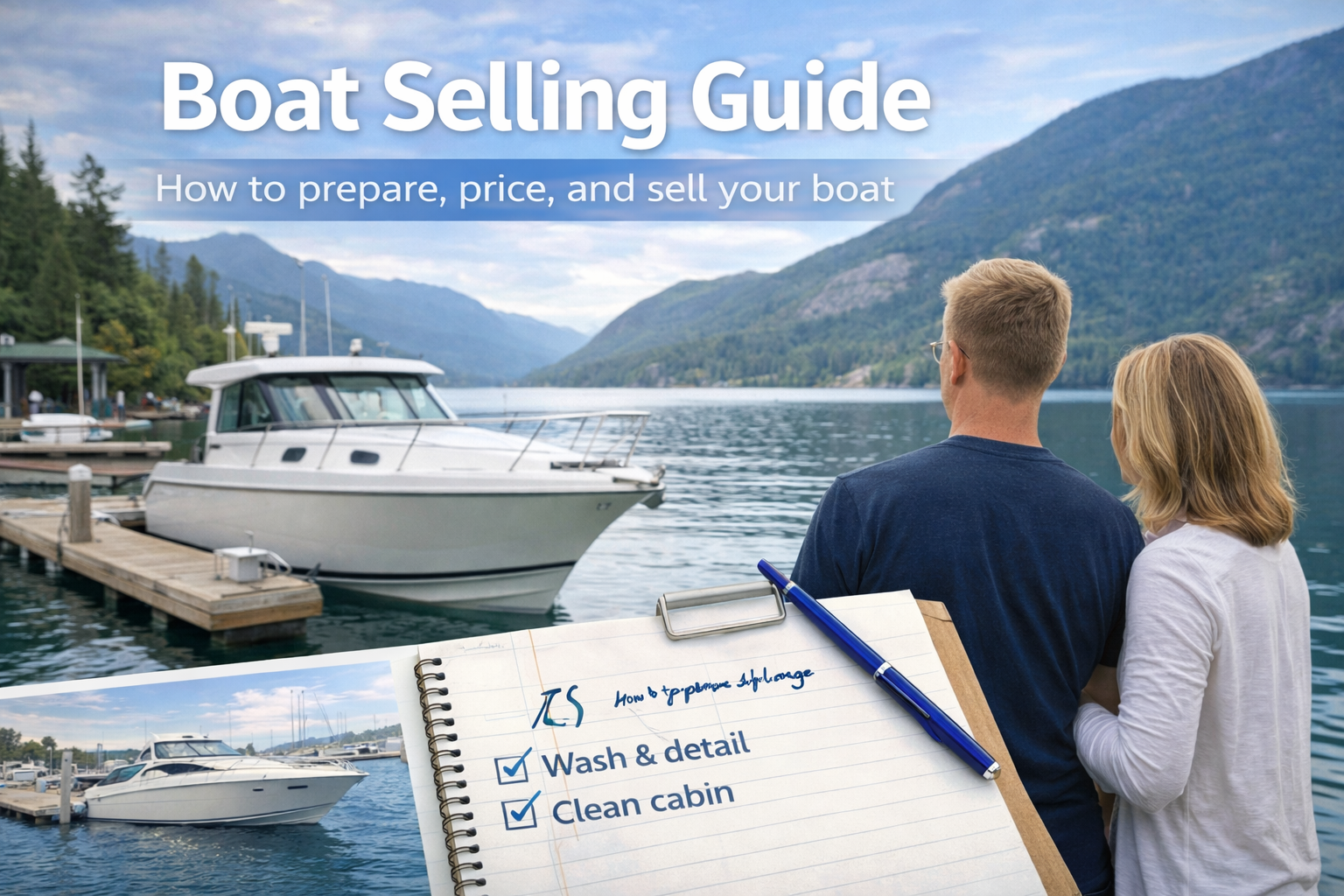
Selling a boat is very similar to selling a car — condition, maintenance records, presentation, and documentation all play a role in how quickly it sells and for how much. Whether you're upgrading to a bigger boat or stepping away from boating entirely, a strategic approach can maximize your final sale price and reduce time on the market.
This guide covers the full selling process from preparation and pricing to listing, negotiations, and safe ownership transfer.
1. Preparing Your Boat for Sale
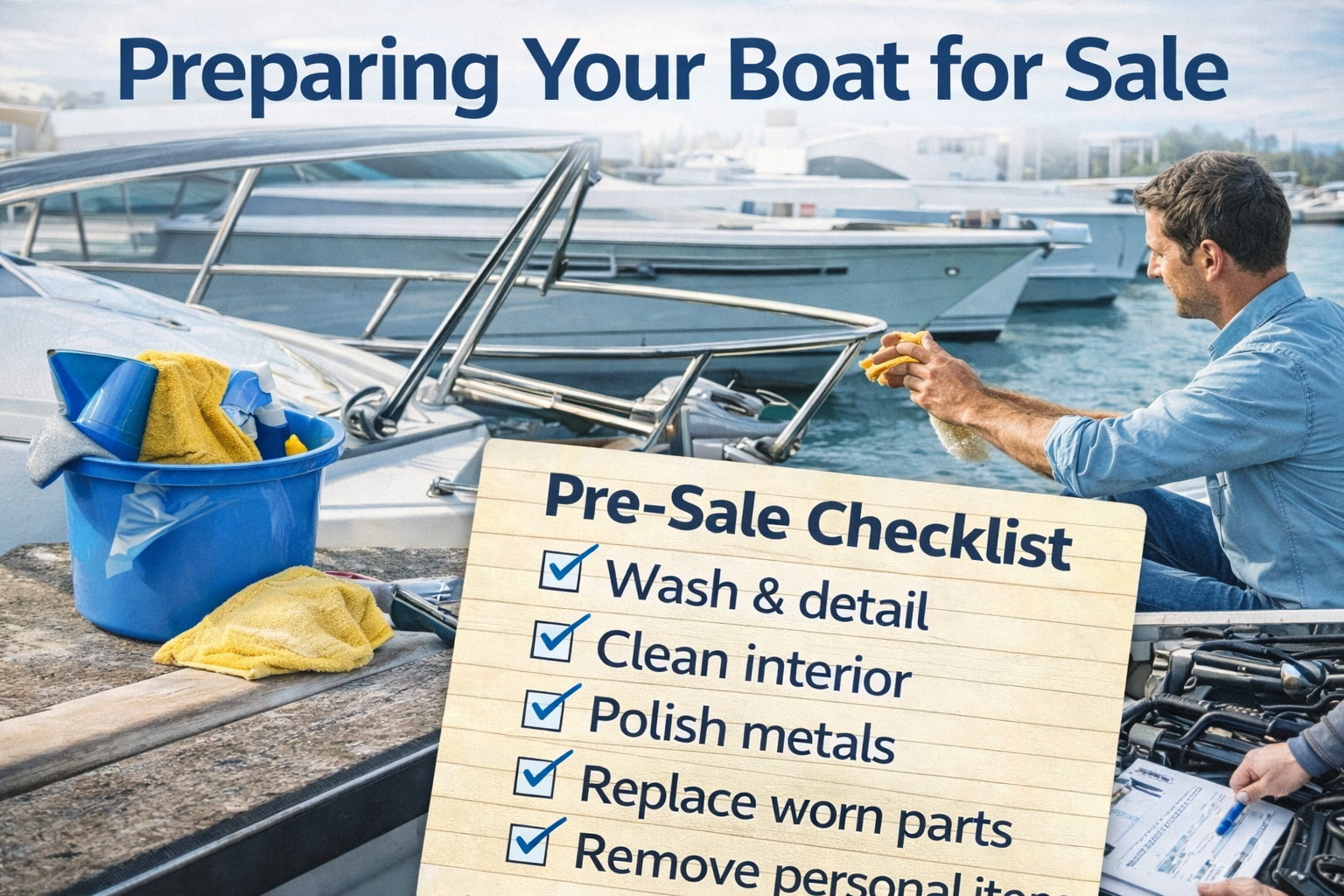
First impressions matter. A clean, well-presented boat signals that it has been cared for and reduces buyer uncertainty.
Pre-Sale Checklist
- Wash, detail, and wax the exterior
- Steam clean upholstery and flooring
- Polish metals and restore gelcoat if faded
- Replace burnt bulbs, ripped cushions, damaged zippers
- Remove personal items for clean staging
- Service engines and change filters
Most buyers will bring a mechanic or surveyor, so handling small issues ahead of time prevents bigger price concessions later.
2. Pricing & Valuation
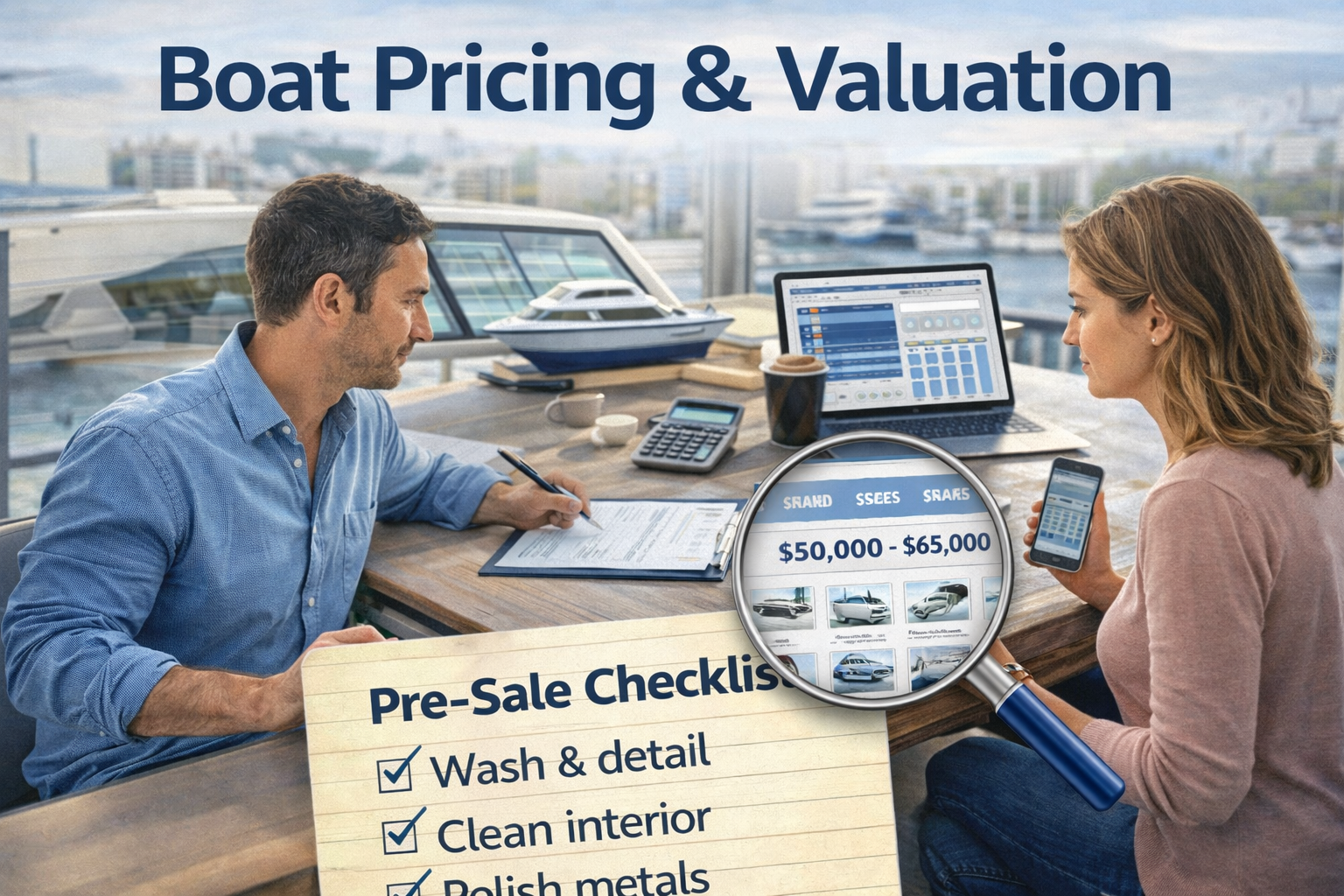
Setting the right price is critical. If priced too high, it sits on the market. Too low, and you leave money on the table. Use similar make/model/year listings and marine pricing guides to benchmark your value.
Factors That Influence Price
- Engine hours & maintenance history
- Hull condition (oxidation, damage, repairs)
- Electronics installed (radar, GPS, sonar)
- Trailer included (or not)
- Location & seasonality
For higher-value boats, consider hiring a marine survey for an unbiased valuation that builds buyer trust.
3. Photos, Videos & Listings
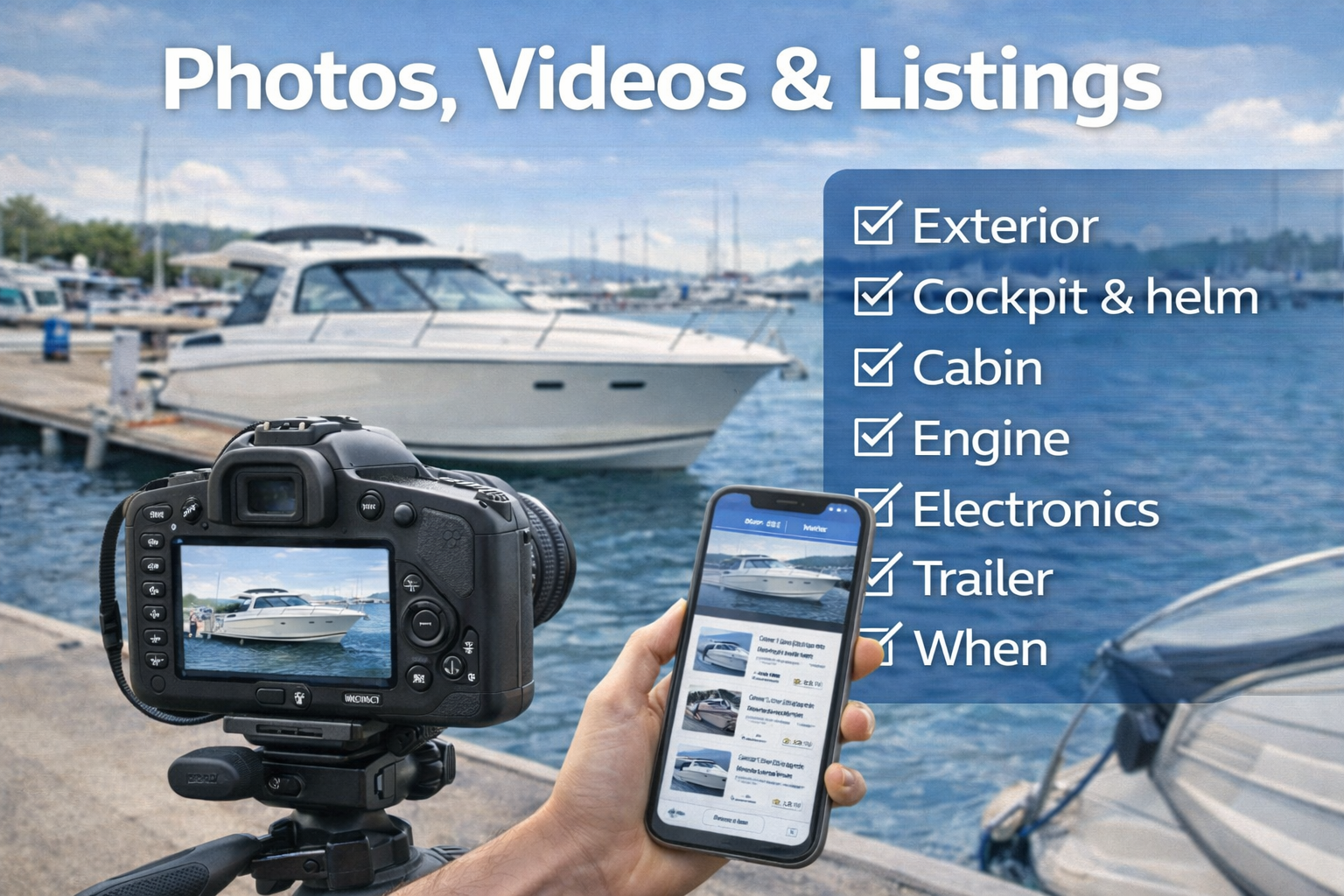
Great listings sell faster. High-quality media showcases condition and helps buyers shop remotely, especially for out-of-state or international purchases.
Must-Have Photos
- Port & starboard exterior
- Cockpit & helm station
- Cabin (if applicable)
- Engine & hour meter
- Electronics & accessories
- Trailer (wheels, tongue, VIN)
Consider adding a short video walk-through or cold-start engine clip — these dramatically improve trust.
4. Paperwork, Titles & Documentation
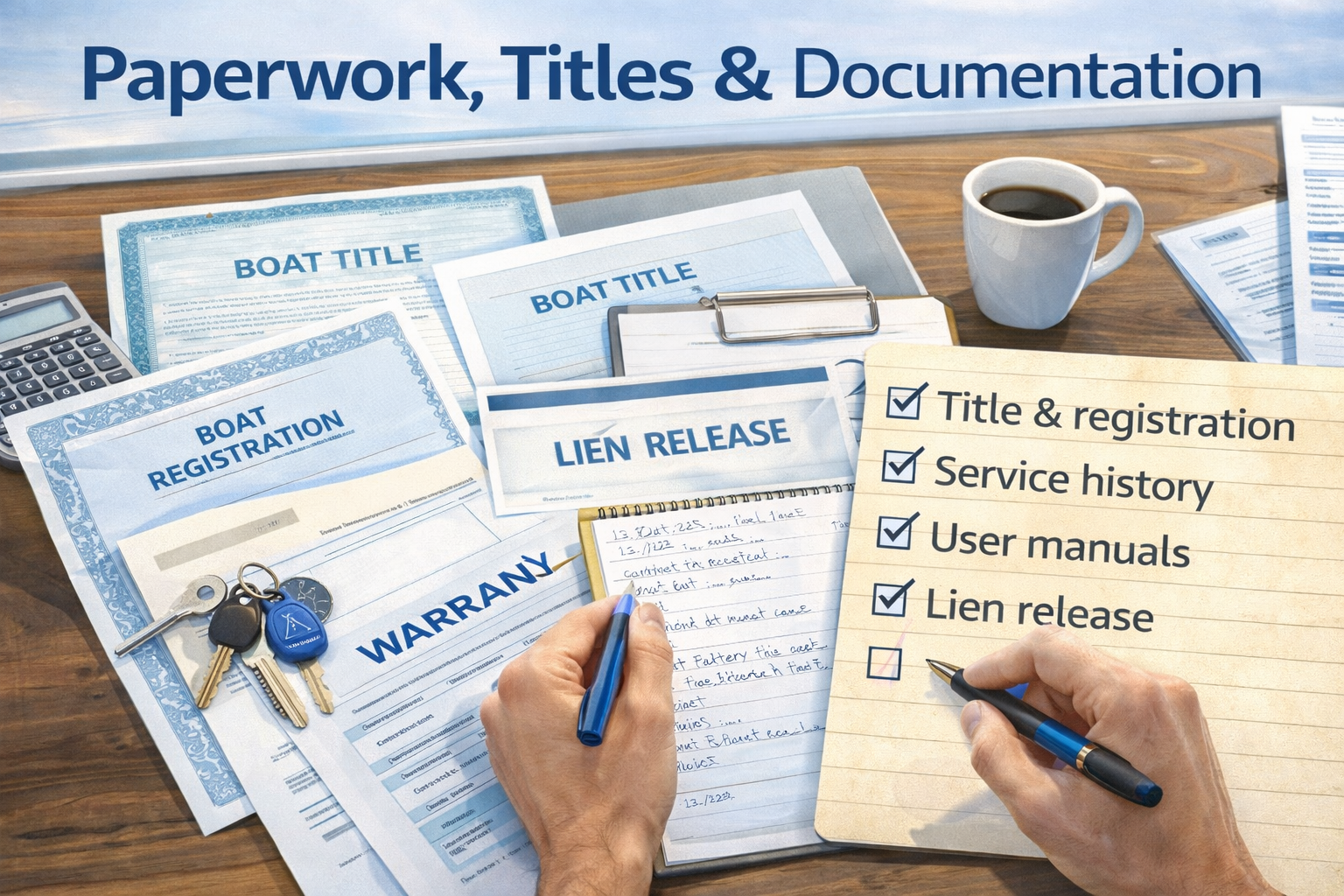
Serious buyers will ask for documentation before moving forward. Organized paperwork removes friction during negotiation.
- Title & registration (state requirements vary)
- Engine & trailer titles (sometimes separate)
- Maintenance & service logs
- Manufacturer manuals & warranty info
- Lien release if boat was financed
5. Negotiation & Sea Trials
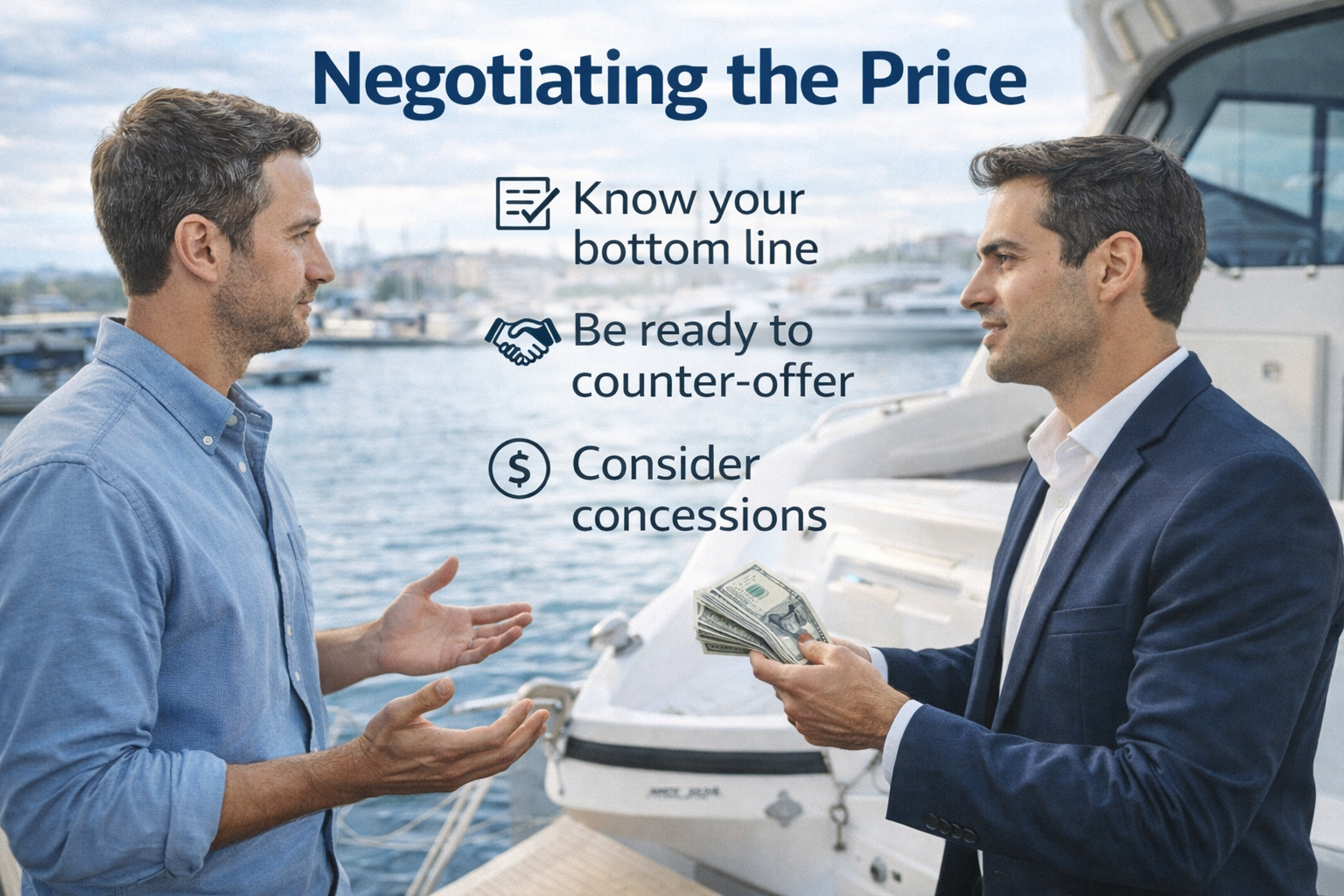
Once a buyer is interested, expect a sea trial and potentially a survey before finalizing price.
- Require a refundable deposit before sea trial
- Discuss who pays launch fees and fuel
- Price adjustments should reflect survey findings
- Always use a bill of sale during transfer
Be transparent — honesty builds trust and reduces renegotiation later.
6. Where to Sell Your Boat

Sellers today have more options than ever. Each has tradeoffs in speed, exposure, and fees.
- Dealerships: Fast trades, lower payouts
- Brokers: Best for yachts & cruisers
- Private Sale: Highest payout, more effort
- Boat Shows: Motivated buyers in one place
- Online Marketplaces: Largest audience, low cost
Choose the channel based on your timeline, boat category, and desired involvement level.